

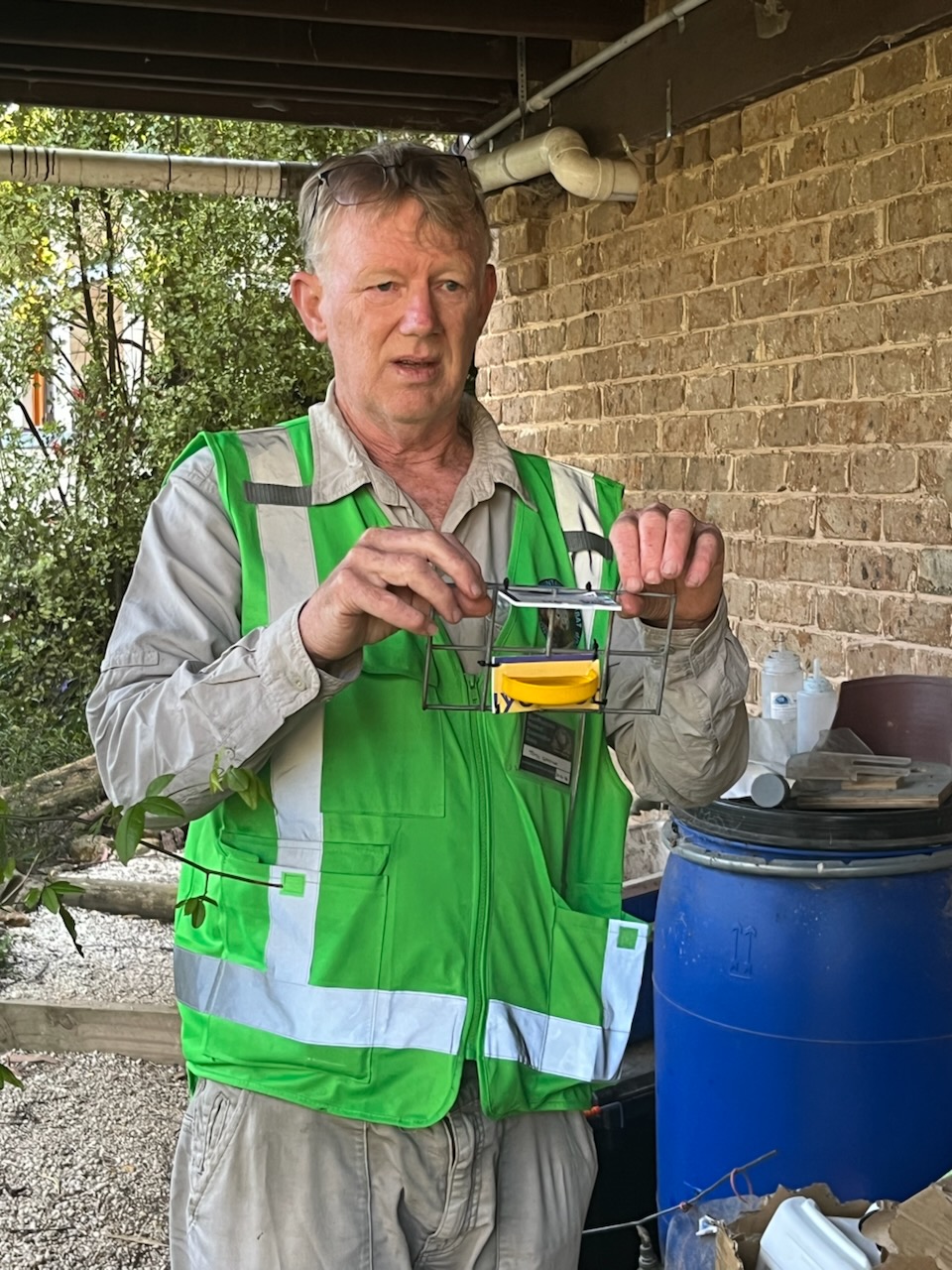
Blue Mountains Wombat Conservation Group president Tony Garman demonstrates how a burrow flap works.
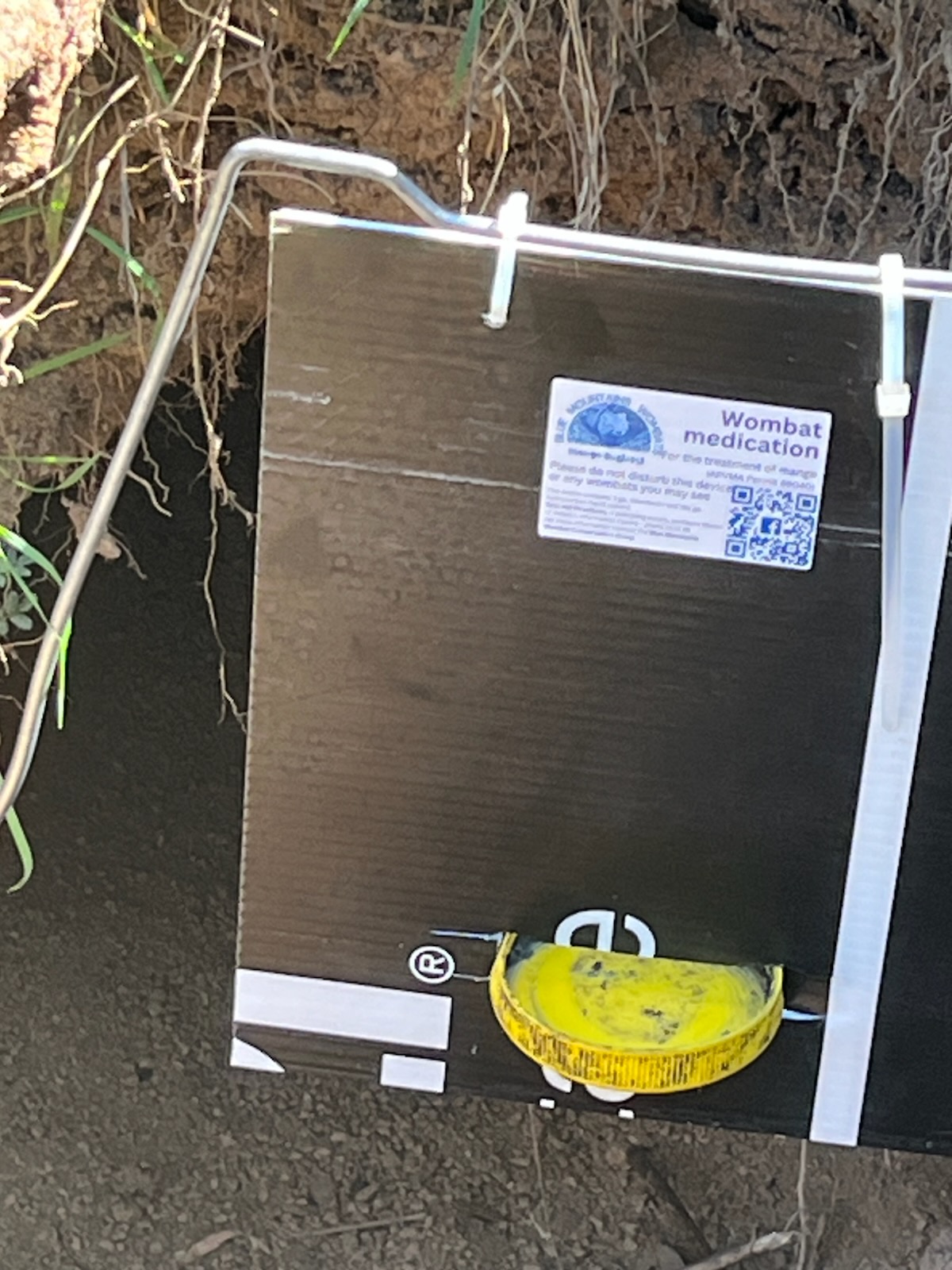
The burrow flap applies medication that will spill onto the back of a wombat passing through in either direction.
Recently, Blue Mountains Gin Company’s Factory Bar, in north Katoomba, hosted an auction event that raised more than $7000 for medications used to treat sick wombats in the Blue Mountains. In late September, we extended our involvement in this worthy cause by learning how treatments are applied to free-living wombats in the Megalong Valley.
Pink ribbons, cube-shaped dung and tunnels into the hillside…
On an excursion in the majestic Megalong Valley with Blue Mountains Wombat Conservation Group, we see many signs of wombat presence, but no actual wombats.
Which is no surprise because daylight hours usually find wombats snug inside a cool burrow, awaiting the evening’s foraging expedition.
“Even volunteers who’ve been in the field with us for months might not have seen a wombat,” says Tony Garman, president of the conservation group, who leads my wife, Jann, and I to a shady gully where wombats reside among the trees.
The volunteers’ goal is to save the wombats from sarcoptic mange, a nasty affliction that’s killing many of these marsupials in the Blue Mountains and elsewhere in eastern Australia.
The pink ribbons tied to trees in the gully are used to mark the dozen or so burrows where wombats with mange are being treated.
And the dung? Wombat poo is dry, solid, oddly cube-shaped, and plentiful around burrows.
Guided by Tony, we top up containers of the chemical Cydectin held in framed flaps at burrow entrances. A wombat passing in or out will lift the flap, the liquid will spill and the animal’s back will get a dose of the medication, which is a proven treatment for mange.
As we leave the gully, we reflect on the fact that the burrow flap medication is refilled weekly by the conservation group’s 40-odd volunteers, so that mangy wombats get the ongoing treatment they need.
Blue Mountains Gin Company is pleased to assist in this important work, which is carried out by dedicated people concerned about wombat welfare. While the Bare-nosed Wombat of the Blue Mountains area is not officially endangered, it faces multiple threats – such as roadkill and loss of habitat – in addition to mange. The species therefore needs to be protected as much as possible to keep its numbers viable.
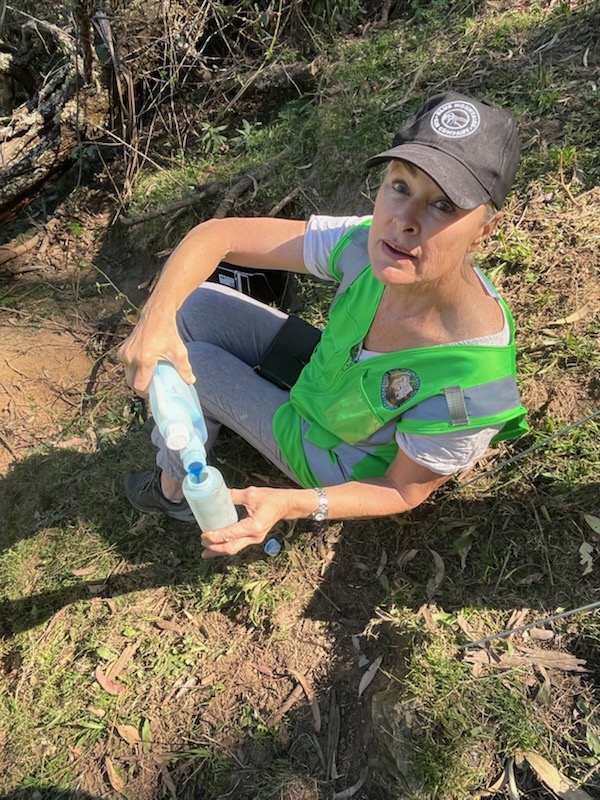
Jann Dillon prepares a dose of Cydectin applied to mange-infected wombats.
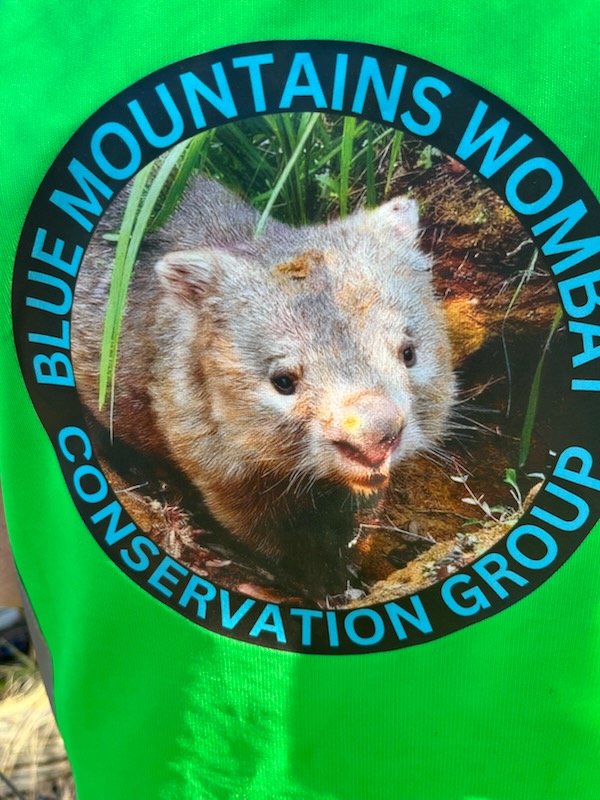
Image used by Blue Mountains Wombat Conservation Group to highlight its goal.