
RISING numbers of small craft distilleries have emerged during the past decade around Australia, especially in funky inner-city areas and tourism-oriented regional locations.
Albeit possibly aware of this growth surge, people outside the spirits sector are often surprised at the scale of this rapid expansion. After especially rapid growth in the past few years, there are now about 700 distilleries producing spirits drinks, up from perhaps a few dozen a decade or so back.
That’s an extraordinary growth rate which, in part, reflects up-scaling markets for spirits, mixed drinks, cocktails and bars that serve them.
More than half of these distilleries – that is, at least 350 – produce gin products; a high number given that the United Kingdom has about 360 gin producers, serving a population twice as large as Australia’s.
Swelling tide of Aussie gin
The UK is also home to some of the world’s biggest gin brands – Gordon’s, Beefeater, Tanqueray, Bombay Sapphire, etc. – which dominate the gin sector here, despite significant inroads by local gin products.
To stand out amidst the hubbub of the competitive spirits sector, producers have to find ways to convey a unique identity to their current and potential customers.
One way to do this is for the business to have solid local connections that are reflected in its products and overall image.
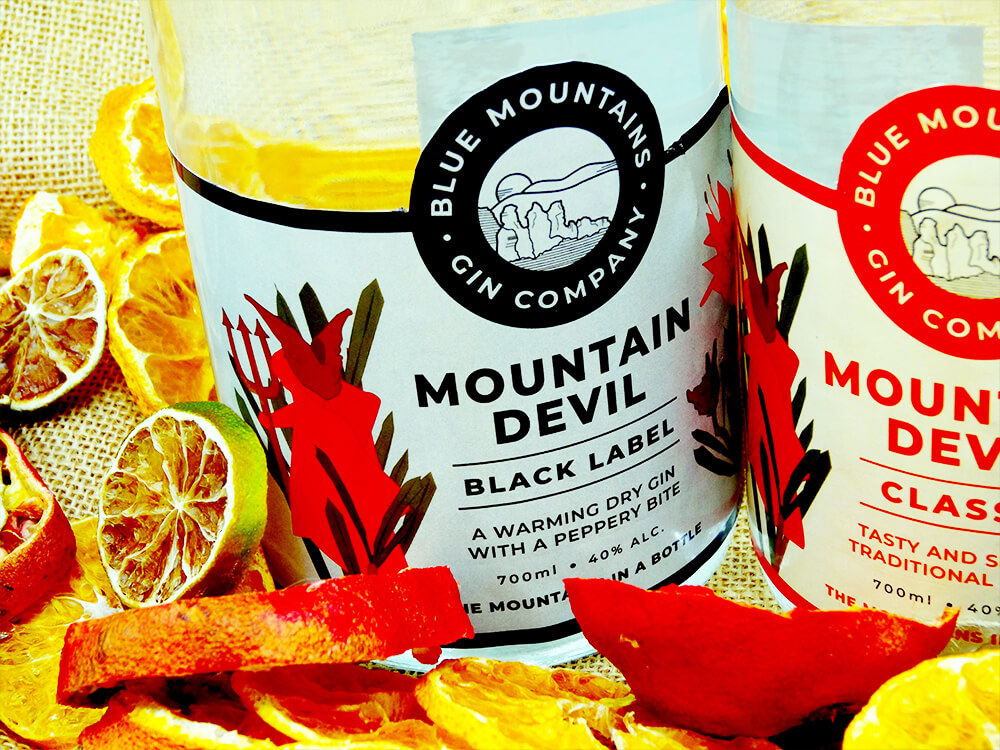
We at Blue Mountains Gin Company have, since our launch in 2021, emphasised that locality is central to our business. This connection is expressed in many ways, including enlisting the Mountain Devil as our company emblem, including it on our labels, and naming many of our products after local landmarks and identities.
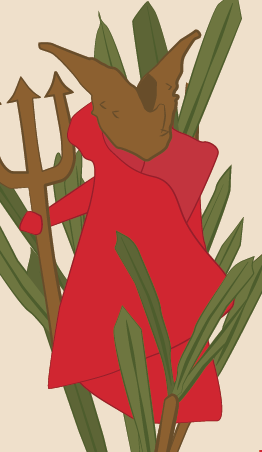
Our version of the traditional Mountain Devil character.
We adopted the Devil as our mascot because it has a long heritage as an emblem of the Blue Mountains. The illustration above, derived from local tradition, is based on the hard seedpod of the Mountain Devil plant (Lambertia Formosa) which looks uncannily like a little devil with horns.
In times past, the devilish pod was crafted into an appealing little figure with red cloak, pipe-cleaner limbs and trident fork. These could be bought in Mountains shops and kids sometimes made them at school.
During the Mountains’ great days as Sydney’s favourite holiday and honeymoon destination, locals and visitors recognised the Mountain Devil’s connections with the region.
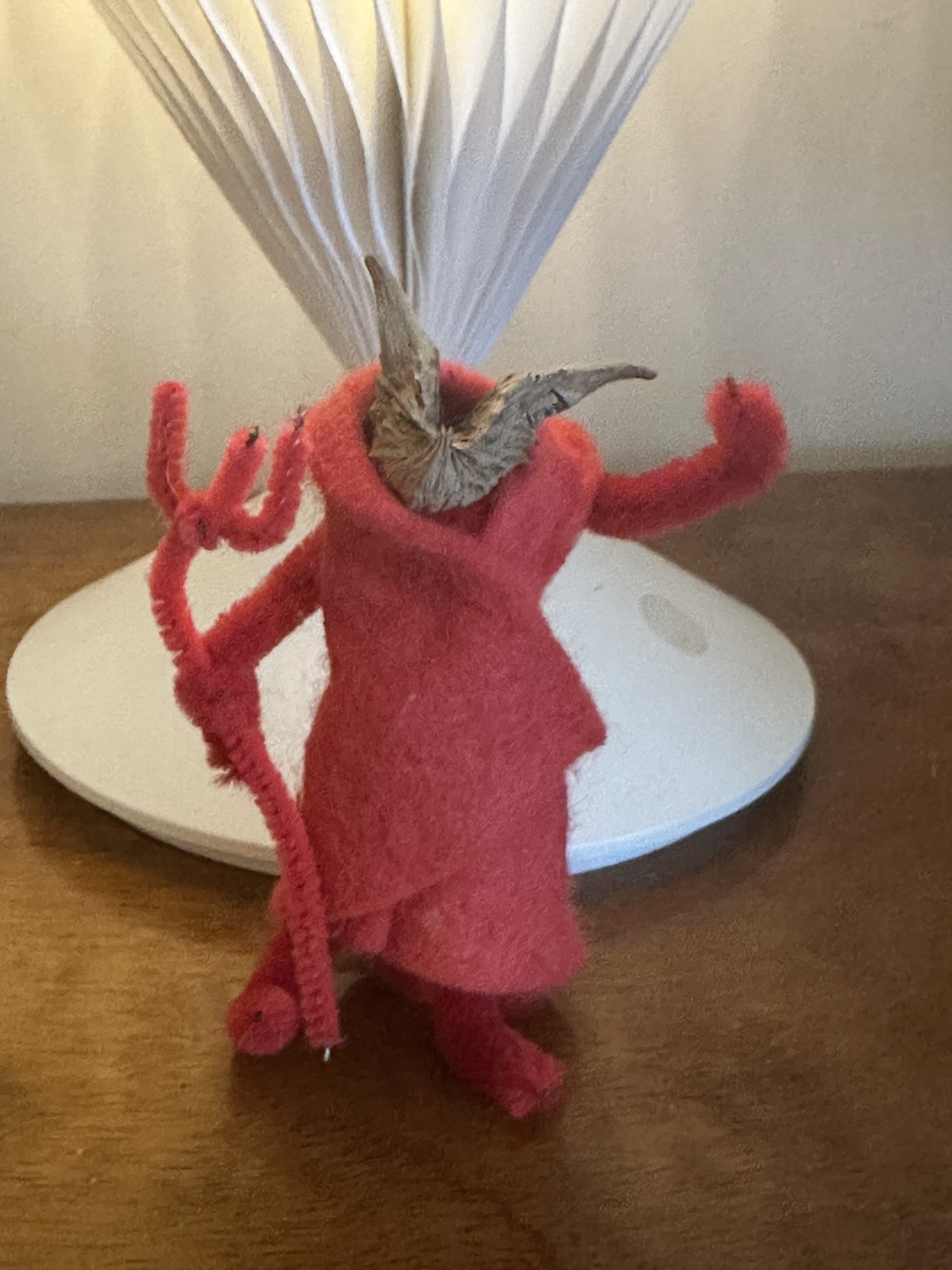
In homage to the Devil’s local heritage, many of Blue Mountains Gin Company’s drinks products are included within the Mountain Devil range. Extending our revival of this tradition, we are now selling a line of old-style Devil figures made with red pipe cleaners, draped in a red cloak and clutching a trident.
The figures are on sale at the Blue Mountains Visitor Information Centre at Echo Point, and are proving popular with visitors. While awareness of the Devil’s role as a Blue Mountains emblem is much diminished these days, some people recall it and delighted that we are reviving the story. For others, it is new information and an insight into bygone times.
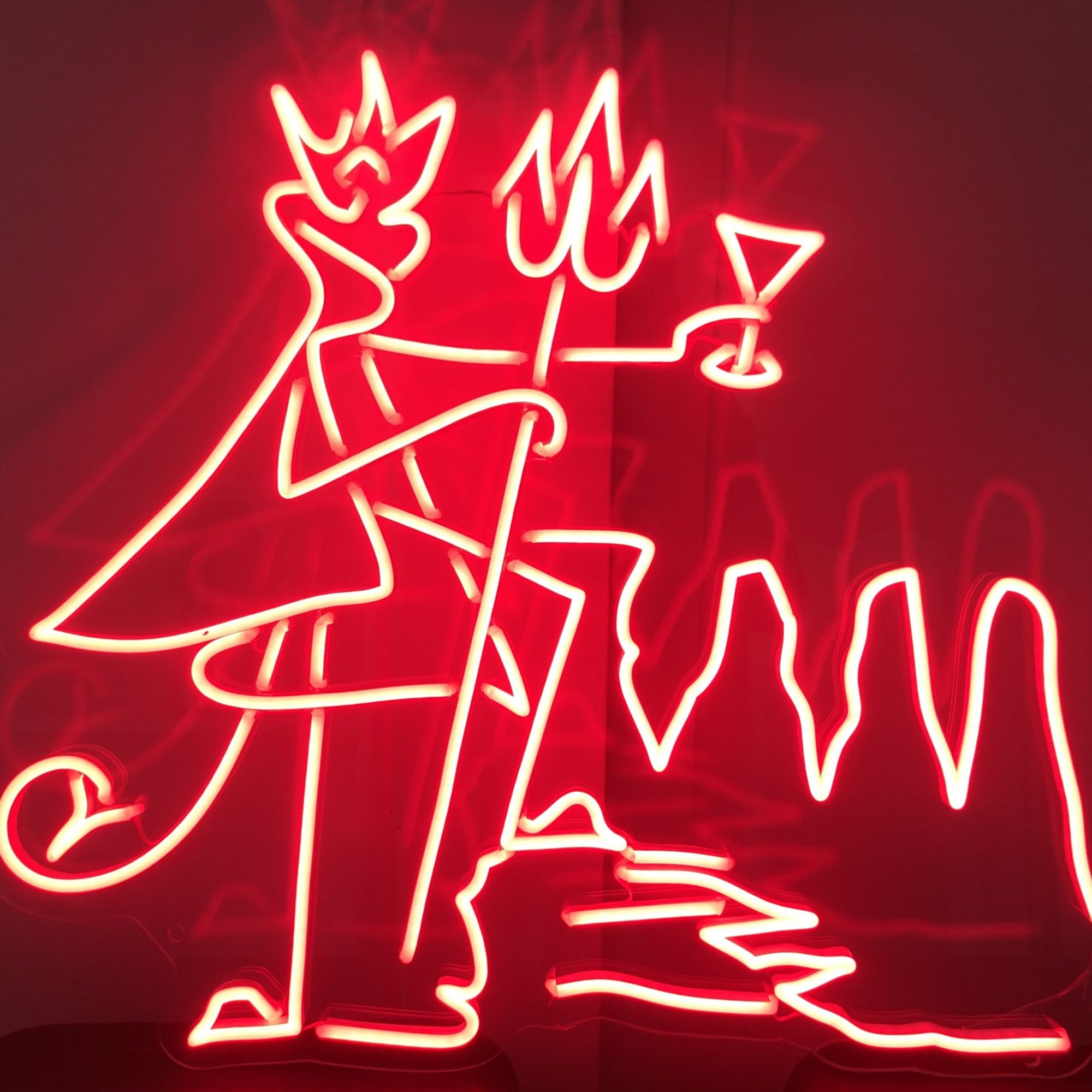
We use the Devil image in many formats and business locations, including at our Factory Bar, connected to our distillery at 24 Whitton Street, Katoomba. Becoming known as a landmark here is our illuminated neon Mountain Devil sign in the front window.